Showing posts with label Mindy Kaling. Show all posts

Thursday, June 13, 2019

LATE NIGHT

Emma Thompson     Mindy Kaling     John Lithgow     Hugh Dancy     Max Casella     Denis O’Hare


     You know those movies that are so funny you miss some of the lines because people are laughing?  That’s what Late Night is; Mindy Kaling’s script is chock full of sharp witticisms along with plain common sense that provokes thought and consideration about topical issues that elicit ambivalence and the need to squirm.  Emma Thompson’s characterization of a gorgeous, haughty night show host who is dependent on her writing team’s jokes and who gets gobsmacked by an inexperienced, “factory worker” with a heart makes this comedy many steps above most.  Kaling has a lo-ooong career ahead of her. One of the most challenging assignments in movies and television is that of making a comedy that is really funny but thought-provoking at the same time.
     Katherine Newbury (Thompson) has won awards for her late-night television show of ten years, but it seems to be getting stale and not keeping up with the times. As so often happens, a sudden social pressure makes the show runners start scrambling.  Diversity is one such concept.  “Hire a woman!” comes the pronouncement for the writing staff, and that’s how a Native American woman with little experience in comedy and coming from a chemistry laboratory gets hired for the “Tonight” show. 
     How Molly (Kaling) fits and doesn’t fit into this group becomes part of the story. But another part of it is how Katherine has to change in response to all kinds of forces coming after her.  
     Molly represents frankness and truthfulness, which is revolutionary in the entertainment world.  Not only that, she doesn’t observe the tacit rules of engagement, especially toward superiors. But the beauty of the writing is that Molly is usually right—no matter how much resistance she gets—in ways the audience will understand.  “Never give up” is the motto she pins to the wall behind her desk, but even she is put to task for this a number of times.
     Katherine is a fine example of a narcissistic person who doesn’t bother to know anyone else, is extremely intelligent, goal-directed, and able to let the verbal jabs fly in a barrage against anyone in her way.  As a listener rather than the target, her retorts are actually funny and highly entertaining.  They appeal to baser urges that we are not able to express nearly so well.
     The two female leads have an armada of different kinds of foes that women all over will recognize.  For Molly, it’s the clutch of male writers jealously holding on to their turf—even if it’s the ladies room that hasn’t been used because there haven’t been any women around.  (The show does a fantastic job in depicting the lame defenses males and whites give for their behavior.)  But it’s also the female boss above Molly who has the same prejudices in many respects the male writers have.  For Katherine, it’s the icy, all-business Caroline Morton (beautifully rendered by Amy Ryan), owner of the network, who is taking a ratings-only approach to scheduling/cancelling a show.  But most of all it’s her public, which she hasn’t bothered to “read” and listen to for years.  An entertaining—and provocative—aspect of the film is its emphasis in so many ways on listening.  Paradoxically, not listening is highlighted to show its importance.
     Use of social media and managing it makes this film even more contemporary.  It models how to deal with it in a way that works for you, rather than allowing it to work against you.  I was reminded of one of my esteemed bosses’ pronouncements to us:  “When in doubt, tell the truth.”

I can’t think of anyone who would not be affected by this film and inspired to do better.  (Ahem…well maybe I can.)

Grade:  A                        By Donna R. Copeland

Thursday, June 7, 2018

OCEANS 8

Sandra Bullock     Cate Blanchett    Rihanna    Sarah Paulson    Mindy Kaling    Awkwafina
Anne Hathaway     Helena Bonham Carter     Richard Armitage     James Corden    Dakota Fanning


     This clever, fun heist movie will engage you, intrigue you, and keep you entertained. Debbie Ocean (Bullock), sister of Danny (George Clooney) in previous Oceans movies, is just being released from prison after serving five years. She bounds out in the same outfit as when she went in—dressed for the evening in a trendy black outfit—assured that she can go anywhere and do what she wants with the $45 in her pocket. And we see how she begins to do just that with her light fingers and made-up stories as she ensconces herself into a fancy hotel and gets in touch with her seven specially talented friends and accomplices, the first being Lou (Blanchett), an Australian motorcycle enthusiast and sharp observer of human behavior  
     Debbie has used her time in prison well, figuring out detailed plans for living up to her family name, exacting a delicious revenge, and getting a ticket to the high life for life.  Debbie and Lou flesh out a strategy for a major heist of jewelry at one of THE social events of the year, the Met Gala, hosted by the iconic Vogue Magazine editor and artistic director of Conde Nast publications, Anna Wintour who appears as herself in the film.  
     Debbie and Lou assemble a motley team of thieves, smugglers, fashion and jewelry designers, forgers, and computer geniuses to play their roles in an intricately choreographed dance designed to net them all a sizeable share. What are they after? Cartier’s 150-million-dollar diamond necklace.  It will involve managing to get just the right celebrity to wear it to the ball.  
     Some of the funniest scenes include the eccentric fashion designer Rose Weil (Carter) flattering the always-aspiring celebrity Daphne Kluger (Hathaway) to go along with the plan to wear the necklace.  (Not hard at all, once she sees it.)  To watch Hathaway acting out preening and self-love in brilliant red lipstick in front of the mirror as she tries on various necklaces (the real diamond one is held out as a tease) will surely make you groan and laugh at the same time.  
     Also engaging are glimpses into the current lives of the fellow co-conspirators. Tammy (Paulson) is a contented mother who buys tens of bicycles on eBay when she has only one child.  Nine Ball (or “Baller”, if you prefer) (Rihanna) is a wizard on the computer, and most of the fun here is seeing others having to catch up with her; and like any good Asian has a relative, April (Midori Francis), to come through at a crucial time.  Mindy Kaling, as Amita, the jewelry designer, is trying to find a partner on an internet match site, but she will amuse and impress you with her rather naïve pronouncements coupled with design efficiency.  Constance (Awkafina) always shows up just in time, and even though she is simply collecting and sorting things, you smile at her dedication.  
     In Oceans 8, Director Gary Ross demonstrates his sensitivity toward women’s important issues, his delight in mixing up craftiness and comedy, and his flair in infusing excitement into a rather predictable plot.  The journey there is the point, and it will serve as a good time to relax and simply enjoy.
     This Oceans’ cast impresses with its unwavering skill and art.  The major protagonists and supporting actors deliver what we hope for and expect in a film of this kind.  Bravo to all!

This is a great movie for kicking back, relaxing, and letting the irony and truthfulness amuse you.

Grade:  B                                    By Donna R. Copeland

Wednesday, March 7, 2018

A WRINKLE IN TIME

Storm Reid     Oprah Winfrey     Reese Witherspoon     Mindy Kaling
Chris Pine     Gugu Mbitha-Raw     Zach Galafianakis     Michael Pena     David Oyelowo


     This is a fabulous production through and through.  Based on a novel of the same name by Madeleine L’Engle, it packs an emotional punch in following the arc of transformation in an embittered girl trying to cope with perceived abandonment and possible death of her father.  She has cut herself off from friends, allowed her performance at school to slump, and of course then becomes the butt of cruel barbs from classmates.  Her self-esteem has bottomed out, and it seems as if no one can help her.
     But something miraculous happens that reunites her with her father’s dream and prods her to begin a painful, terrifying journey of self-discovery and acceptance.  This is where film comes into its own in telling a wondrous story, and the filmmakers responsible for cinematography, art and production design and visual and special effects create the magic for us to go on that journey with her.  It will be beautiful, but terrifying and emotional and exciting as well, as we travel through warped space and time.  An end goal of a search to find someone actually becomes a rescue mission (of more than one person).
     Three supernatural beings make their appearance in Meg’s (Reid) life in the forms of the three Mrs.:  Mrs. Whatsit (Witherspoon), Mrs. Who (Kaling), and Mrs. Which (Winfrey).  They are other-worldly, but present themselves as “warriors who serve the good and right in the universe.”  Whatsit is more human-like in her playfulness and in making errors in communication, and she represents the annoyance of Meg’s mother, her school principal, and friends who get exasperated with Meg.  Who talks in quotes from famous writers to get her points across, and represents intellectual curiosity and and warmth—which is a nice combination.  Which is a guiding force that seems best equipped to get through Meg’s defenses and guide her to a more realistic picture of herself, emphasizing the fundamental importance of faith in oneself and allies sticking together.
     The fantasy has a way of reminding us of current events with some of its principles, such as fear leads to rage, which leads to violence, which leads to darkness.  It has a message about the value of individuals’ being a source of light in dark times.
     The positive messages in A Wrinkle in Time make it more than just a thrill and fantasy; it has substance as well with respect to truthfulness (including to oneself), frankness (expressing thoughts/feeling that need to come out), and self-acceptance (including owning and accepting our faults.  We get to see all the main characters profit from their experiences and introspection. 
      Ava DuVernay can be so proud of her accomplishments in film; it’s mind-blowing to think about how she has ranged from Selma to A Wrinkle in Time, two vastly different genres and movie making.  The three “Mrs.’s” are entertaining and extremely helpful to Meg in their insight and encouragement.  Meg has two other fine supports on the journey; her brother (Deric McCabe) and friend Calvin (Levi Miller).  Her parents (Pine and Mbitha-Raw), both scientists, come across as realistic and loving but with flaws.  Their mixed-race family is inspiring in its inclusiveness; although I have to admit that I was a bit turned off by the “preciousness” of the opening scenes showing the family as more idealistic than real.
     A Wrinkle in Time has some very frightening scenes, so a caution to parents with sensitive children.  They will want to make sure to wait until their child is older, but above all be prepared to discuss the movie afterwards with their children, regardless.  As an adult, those scenes were thrilling to me, and add much to the quality of the film, so I’m glad they were left in. 

A marvelous fantasy based on a beloved book with outstanding visual and special effects and powerful messages for all kinds of children.

Grade:  A                                                By Donna R. Copeland

Tuesday, June 16, 2015

INSIDE OUT

Voices of:  Amy Poehler   Phyllis Smith   Mindy Kaling   Lewis Black   Bill Hader   Richard Kind   Kaitlyn Dias


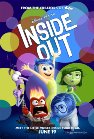
From the clever title to the animation, the script, and the actors, Inside Out is a positive tale about how to deal with emotions.  The primary thought coming through is that negative emotions like sadness, anger, and fear are healthy and need to be expressed in order to get the “bad” that’s inside neutralized or to use one (such as anger) to accomplish a task.  At one point, Anger (Black) blows fire out his head to break a window in order to rescue Joy and Sadness who have just been hurled splat against it from the outside.)  Joy (Poehler), the leader of the group instinctively learns how to deal with Sadness (Smith), which I recognized as what a therapist will do with someone who is depressed (e.g., unfailing encouragement, patience, and positive reinforcement for every successive approximation toward self-confidence and effectiveness).  Joy also discovers the value of sympathy in comforting someone who has experienced a loss, as when Sadness listens empathically to Bing Bong’s (Kind) woes and he begins to feel much better.  Upshot:  Joy is not always the answer to an emotional problem.
           I am impressed that Pete Docter and Ronaldo Del Carmen, directors, came up with the basic idea of having actors voice the emotions that a little girl goes through from the time of her birth.  Like an ego with executive functions, “central station” (the embodied emotions) does what it can to orchestrate the goings-on inside Riley’s (Dias) head, modifying Riley’s reactions and experience to maintain balance.  An important memory bank is kept to pull out those that might be helpful in a specific situation, and more complex “personality islands”—like “Family” are also available.
           This is a high tension film, and I was a bit weary by the end with all the close calls and constant urgency to rescue Riley, who has been traumatized by a move from the home she had always known to one that is so different and strange.  Her parents (Diane Lane, Kyla McLachlan) are understanding, but overlook the fact that she is having a difficult time adjusting.  Understandable, in that the father’s business is high stress, and the mother has to accommodate to a much smaller house (Minnesota to San Francisco) and different ethos altogether, like broccoli pizza! 
           I am curious about how much of the principles of this film get through to children and how much they are simply reacting to the colorful characters and animation.  There was applause at the end of the screening I attended, but there was also a lot of restlessness, noise, and babies crying while the film was running.  Presumably, it will appeal more to those older than seven or eight; I would guess that children younger than that will lose interest because so much of the film rests on the dialog, which is more about abstract concepts.

A fascinating trip inside the brain of a child.

Grade:  A                    By Donna R. Copeland